
This plastic injection molding FAQ answers common questions about project fit, drawings, tooling, materials, production, quality, lead times, and quoting.
Project Questions and Answers
Plastic Injection Molding FAQ: Common Project Questions
Start With the Right Information
Plastic Injection Molding FAQ for New and Existing Projects
Every molded part begins with a different set of requirements. Therefore, the answers below explain how LCS Precision Molding approaches common questions from early product ideas through repeat production.
For example, you may be comparing tooling options, transferring an existing mold, choosing a resin, or determining whether your expected volume fits our equipment and processes.
In addition, our team can help identify the information needed to evaluate a project and prepare an accurate quote.
If your question is not covered here, contact the LCS team or send the available project details through our Request a Quote page.
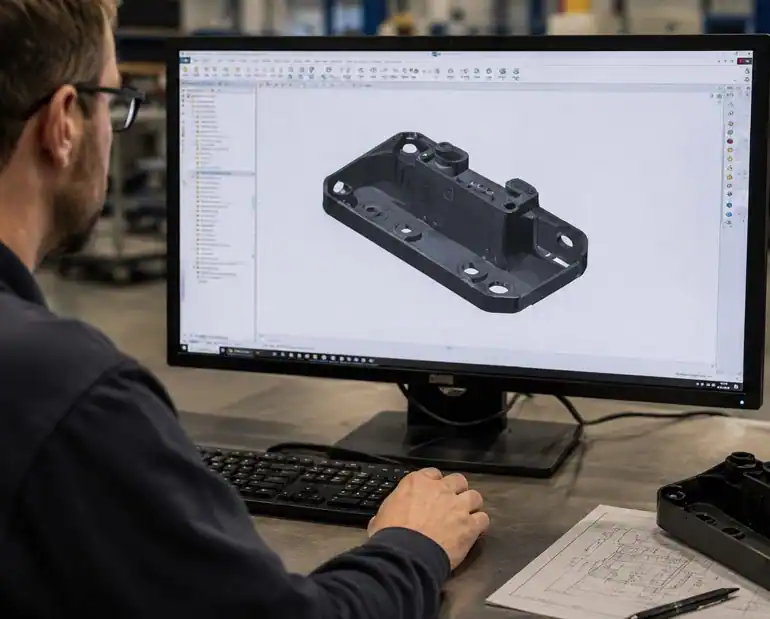
Helpful Details to Share
- Part drawing or 3D model, when available
- Material and performance requirements
- Estimated annual production volume
- Existing mold information or tooling needs
- Color, finish, assembly, and packaging needs
- Target timing and delivery requirements
Getting Started
Planning a Plastic Injection Molding Project
These answers cover the first questions many customers ask when evaluating a new part or preparing to request a quote.
How does plastic injection molding work?
First, plastic resin is heated until it can flow and is then injected under pressure into a mold. Next, the plastic cools into the shape of the mold cavity before the finished part is ejected. Our injection molding production page explains how LCS applies this process, while this general injection molding overview provides additional background.
I have a part idea but no drawing. Can LCS help?
Yes. LCS works with experienced design resources that can help translate a product idea into a detailed part drawing and 3D model. In addition, our team can review design choices that may affect tooling, resin selection, manufacturability, and part cost.
What information should I provide for a quote?
Whenever possible, provide a part drawing or 3D model, material requirements, estimated annual volume, color or finish needs, tooling status, secondary operations, target timing, and delivery requirements. However, you do not need every answer before contacting us. We can help identify what is still needed.
How does LCS handle confidential drawings and project information?
LCS routinely reviews confidential customer information and can sign a customer-provided confidentiality agreement before receiving drawings. Alternatively, we can provide a standard agreement when a customer does not have a preferred form.
Molds and Investment
Injection Mold Ownership, Cost, and Transfers
Tooling choices affect the initial investment, production cost, capacity, and long-term flexibility of a molding program.
Who owns the injection mold after it is built?
Generally, a mold paid for by the customer is a customer-owned asset that LCS stores and maintains between production runs. However, ownership may differ when tooling costs are amortized into the part price or when LCS offers a no-cost tooling arrangement. Therefore, the quotation will state the ownership terms for the specific project.
How much does an injection mold cost?
Tooling cost depends on part size, geometry, tolerances, resin, mold material, expected production life, number of cavities, and other technical requirements. As a result, LCS reviews the part and projected program before recommending and quoting a tooling approach.
Why does annual production volume matter?
Annual volume helps determine the right balance between tooling investment and unit cost. For example, increasing the number of mold cavities can reduce the cost per part, but it usually increases the initial tool cost. Accurate volume estimates help us compare those tradeoffs.
Can LCS run an existing injection mold?
Often, yes. First, we review mold dimensions, construction, condition, ownership, maintenance history, and compatibility with our presses. Standard molds can frequently be transferred, while proprietary insert systems or unusual configurations may require modification or replacement tooling.
Does LCS support prototypes before production tooling?
Yes. Depending on the testing goal, the project may use rapid prototypes, aluminum tooling, steel prototype tooling, or another development method. Because each option answers different fit, appearance, or functional questions, our team will help determine an appropriate path.
Part Requirements
Resins, Colors, Textures, and Additives
Material and appearance decisions must support how the finished component will perform, look, assemble, and age in its intended environment.
What types of plastic resin can LCS mold?
LCS works with a broad range of engineered and commodity thermoplastic resins. Specifically, resin selection depends on the part’s strength, flexibility, temperature, chemical exposure, appearance, regulatory, and cost requirements. We can help evaluate appropriate options for the application.
What color options are available?
Parts can be produced in standard resin colors or matched to an approved customer sample. In addition, the material, finish, wall thickness, and lighting conditions can influence the final appearance, so color requirements should be discussed early.
Can molded parts have a textured surface?
Yes. Standardized texture samples can help a customer select the desired appearance and feel. Because texture is created through the mold surface, it must be included in the tooling and part-design discussion.
Can you add UV inhibitors or other material additives?
Yes, when the selected resin and application support them. For example, UV protection may be incorporated into the resin or colorant. Other additives may address impact, flame, lubrication, conductivity, appearance, or processing requirements.
Can LCS help reduce the cost of an existing molded part?
Yes. Potential savings may come from part design, resin selection, cavitation, cycle time, tooling improvements, assembly changes, packaging, or production planning. Therefore, our team evaluates the complete program rather than focusing on only one cost.
Production and Delivery
Injection Molding Volume, Quality, and Lead Times
Production planning brings the tooling, material, quality, scheduling, secondary operations, and delivery requirements together.
What production volumes does LCS support?
LCS supports both short-run projects and long-term higher-volume programs. Ultimately, the best fit depends on part size, mold requirements, resin, press availability, secondary operations, and the customer’s ordering pattern.
Is LCS ISO certified?
Yes. LCS Precision Molding, Inc. maintains an ISO 9001:2015 certified quality management system registered by TÜV SÜD America. In addition, documented processes, inspection, and production tracking help support consistent results. Learn more on our Quality Assurance page.
What lead time should I expect?
Lead time depends on tooling status, part complexity, resin availability, production volume, required testing, secondary operations, and current scheduling. Therefore, LCS provides project-specific timing during quoting and confirms production schedules as orders are planned.
What work is completed in Waterville and what may use outside partners?
Most plastic components are molded at our Waterville, Minnesota facility. Meanwhile, LCS uses qualified regional and international resources for tooling and may coordinate specialized outside services when a project requires them. Planned sourcing and responsibilities are reviewed as part of the project.
Can LCS provide assembly, packaging, stocking, or specialized shipping?
Yes. In addition to molding, LCS can coordinate value-added services such as assembly, packaging, stocking programs, kitting, and specialized shipping. As a result, customers may be able to reduce handoffs and manage more of the program through one partner. Visit our Secondary Operations and Logistics page for details.
Has LCS worked with my industry or type of part?
LCS serves customers across fenestration, recreation, motorsports, furniture, electronics, industrial products, and other specialized applications. However, we do not accept projects that require cleanroom manufacturing or FDA certification. Review our Industries Served page or contact us to discuss a specific application.
Still Have a Question?
Discuss Your Injection Molding Project With LCS
To begin, if this plastic injection molding FAQ does not cover your situation, tell us what you know about the part, tooling, material, annual volume, timing, and support requirements.
Then, our team can review the information, answer remaining questions, and identify the right next step.